
Time Capsules :: 088
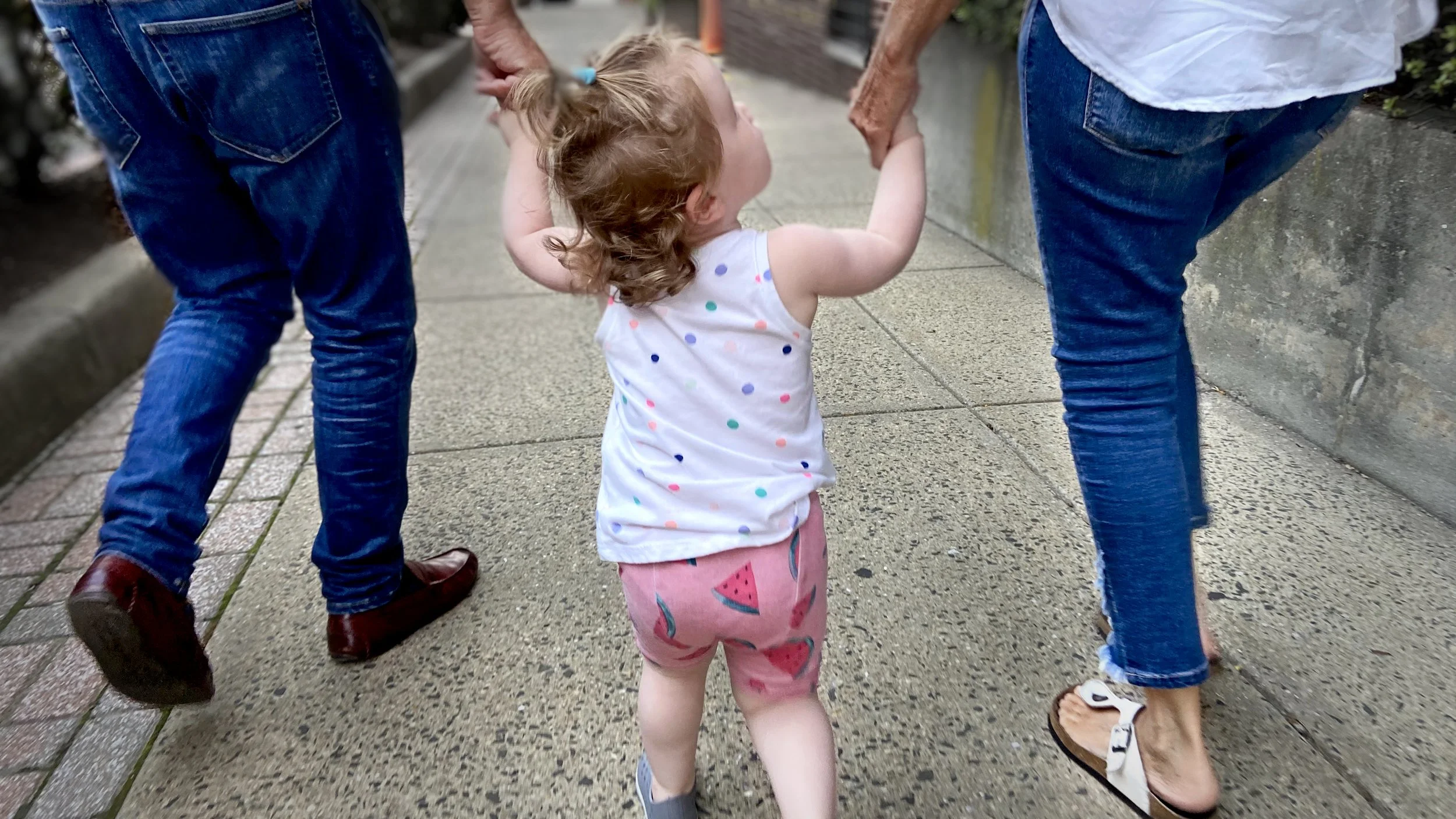
A time capsule of my parents and daughter on their first visit after the start of COVID-19. August 2020.
Hey there, time traveler.
Semiquincentennial
Right now in Philadelphia, they're preparing to bury a time capsule to be opened in 250 years. In 2276. America250, the organization leading the projects says, "More than a symbolic gesture, the capsule fulfills a national responsibility: to document who we were at 250 so that Americans in 2276 can look back with clarity and context."
So... who are we?
It's nearly an impossible task– to try and capture a given time. And to define who we are as individuals or as a society. But, still, we try.
Why? Part of it is a generous gesture into the future. It's saying, that this might help you and wouldn't it be fun, interesting, and potentially valuable to future us to share a little bit of the present.
But I think another part is focused on the present. To not only correct the unfulfilled desire we have to want to know about our past, but also to prove that somehow what we're doing is important. That we are valuable and worth capturing and document and sharing with other people.
I remember being fascinated by the Voyager, launched in 1977, capturing all of humanity and sending it off into space for ET life to find. Then, when I read about the Philadelphia Time Capsule, I knew I wanted to explore the topic. Why do we want to capture this moment in time? How do we curate and tell our story to the future? What use is it when we find one?
Let's uncover more.
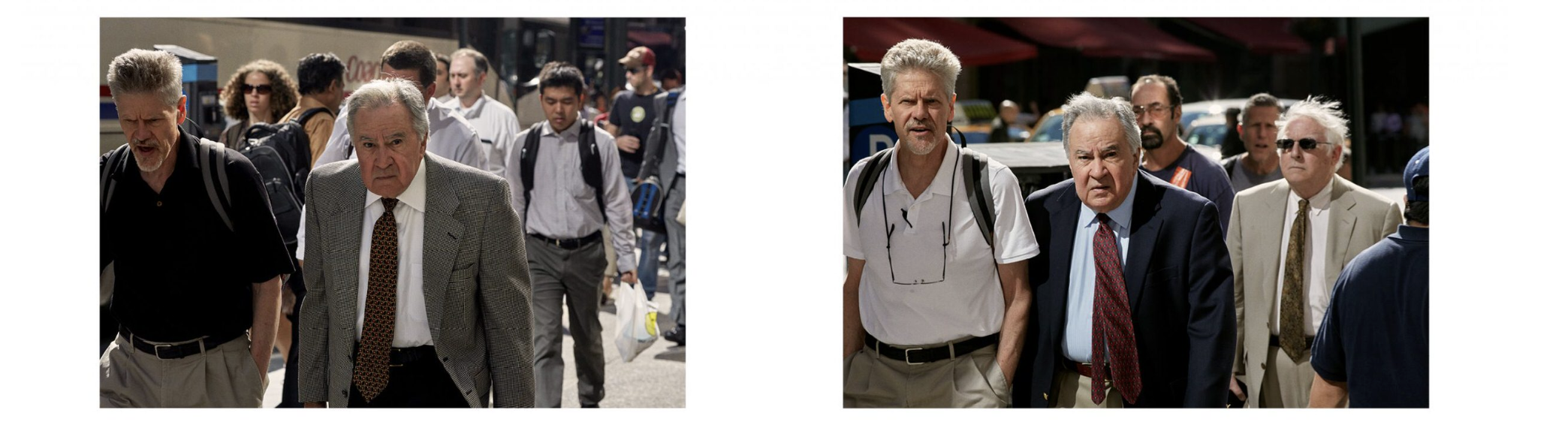
Photos by Peter Funch, who photographed the same corner, 42nd and Vanderbilt, for 9 years and found the same commuters years apart
Personal Archaeology
I have this habit when I open my journal. It's a digital file, so it's easy to search. And I look back on what was happening a year ago today. And 2. And 5. and 10. And 15. And even 18. I started journaling in February 2008. It's nostalgic to explore my inner life from years ago and rediscover relics of a different time.
It's like I'm an archaeologist of my own life. I'm digging through layers to uncover ancient belief systems, unearthing hidden messages and signals of change, and dusting off memories that were buried long ago.
Physical artifacts are the best: I love seeing an old to-do list, a candid photo of me on the phone, an old birthday gift and card buried in a drawer. The minutiae of everyday life are the most interesting. In art history, the pottery, water jugs, and dolls from ancient Mesopotamia are some of the most valuable artifacts in the world.
At some point years ago, I had put my things away and (intentionally or not) preserved a moment. That old me is communicating with the future. Future me.
A diary is a gift to your future self. A portfolio measures a moment in time. A photo album is a story.
In a couple days, I'm heading back to my childhood home. I'm there to visit family for Passover, but also for the explicit goal of clearing out my old bedroom. And one of the things I'm most looking forward to is the personal archaeology.
Ready to dig in.
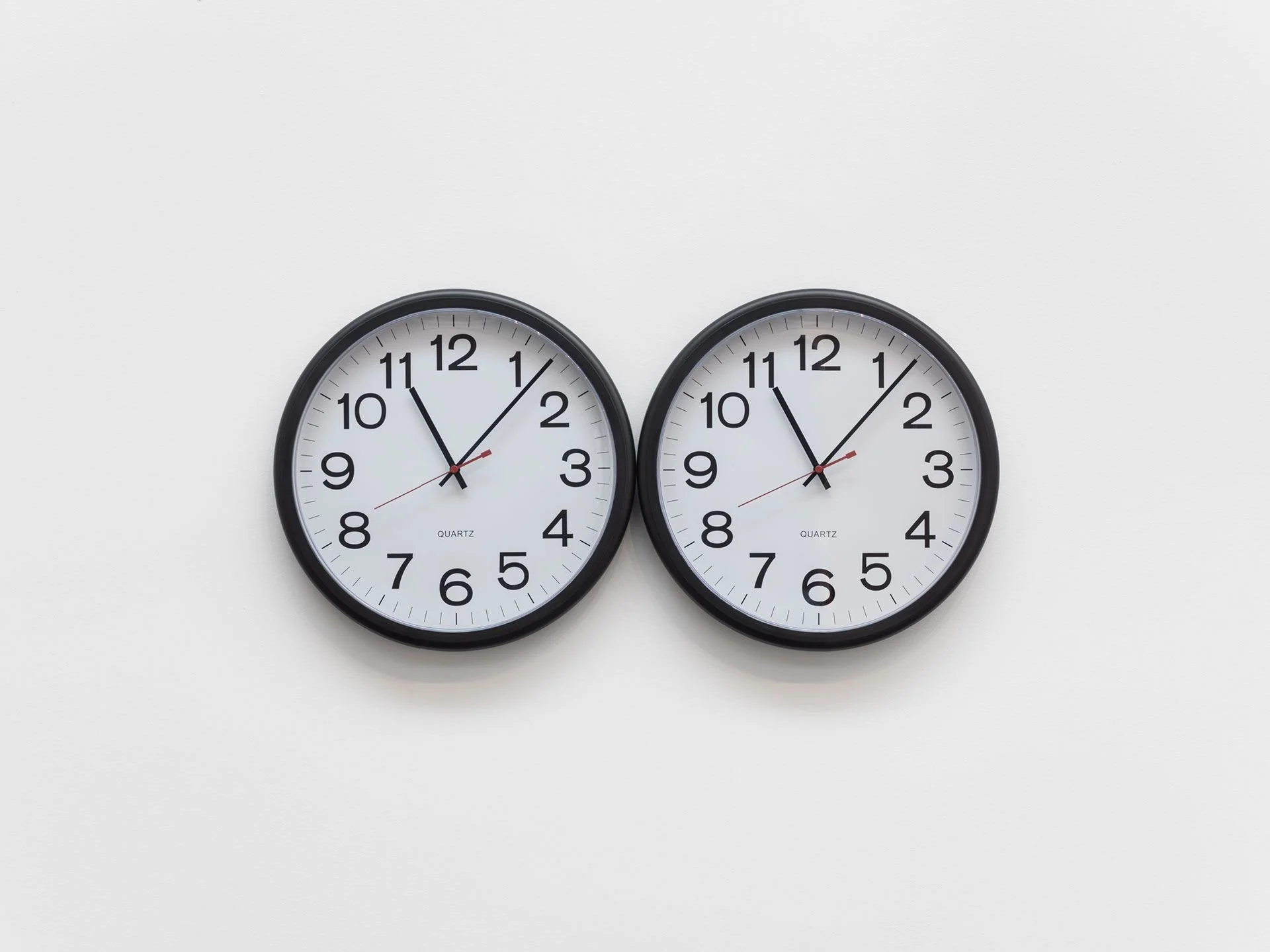
"Untitled (Perfect Lovers)" installation by Felix Gonzalez-Torres. Two clocks are installed on a museum wall with the same exact time. Over months, the batteries and mechanics slow down at different paces and unsync, representing the relationship of the artist and his partner who died of AIDS.
Nostalgia Saves Time
I was reading about a new AI tool and one of the benefits stated that "it saves you time." That's written wrong. In this context, the intention is to equate time to money, like it's a resource that I can "save up" to be spent elsewhere.
But it made me think about time in a different way. Having time capsules on my mind this month, when I first read that phrase, it saw it as "it saves your time." Like, this particular hour, is now saved. Like a moment preserved in a bottle that I can come back to and revisit.
Earlier this month I'm in New Orleans for work. On a morning run through the French Quarter, I turn a corner and get dé vù. 15 years ago, I was here for Mardi Gras on a cross country RV roadtrip with 4 friends.
During our trip, I took detailed notes of our journey. And this year, I decided to unbottle that preserved time for the 5 of us. Each day, I sent a text to the group, recounting the events from our time 15 years ago. Long texts about parade routes and drink orders, favorite sandwiches, random run-ins and songs we karaoke'd and danced to. Resurfacing inside jokes we've long forgotten about.
Whenever we do something memorable, the temptation is to say "we should do that again." The reality is that we won't. It will never be like that ever again. It can't be. But, we had it, even if only once.
It's why I love documentation so much. It allows me to notice how and when things change. It helps me be mindful that what I'm doing right now is the highlight of my day. Or my week. Maybe I notice the lowlight. While I'm in it. And then I capture that in a journal. A selfie. A note to myself. When it's documented, I can come back to it and revisit and relive it.
When we take photos, write down the jokes and events of our best and worst days, we save time. Not literally, of course. But we now have that time, saved.
The Paradox of Today
Let's be time travelers. Let's go back and see what life was like in 150 year increments. Starting with 150 years ago: 1876. It's the start of the industrial revolution in England. There's no labor unions, no such thing as two day weekends. We're in the reconstructionist era in post-Civil War America, where the KKK is in full force and Jim Crow laws have been introduced. Telegraphs were only recently invented and the electric lightbulb hasn't made its way to the market yet.
Next stop, 1726. We're just before the peak of the Age of Enlightenment. Before the scientific method, before constitutional governments, before religious tolerance. We're drinking tea and acting civilized. But in general, water quality is poor, people are getting terribly sick because we don't know about germs and bacteria. Women aren't taught to read and slavery is booming as part of colonial law.
1576. The early Renaissance in Europe, sure. But also the bloody aftermath of the Reformation– St Barts Massacre, Spanish Fury, and the ongoing Dutch Revolt. Religion dominated–it indicated whether you were accepted, taxed, expelled, or killed.
It gets bleaker from here. The farther back we go the worse it gets for more and more people. Most of our time and energy is spent trying to just get enough food. Survival. Famine. War. Plague.
Turn on the news today, and there's a lot to complain about. But as a snapshot of history, it's better than it was. It's getting better for more people. And it's only that we're aware of more things going on in the world and the nature of politics that it feels so bad
But there's another truth about today. Today may be the best it's ever going to get. I'm just entering middle age, I have the freedom to change careers and think about possibility. I have a friend my age just starting medical school. There's hope, possibility, and dreams of wealth and retirement. My kids are healthy, and happy, and generally easy to manage. They play nicely together. I'm not worried about their mental health, issues with drugs or guns or abuse that might come when they're older and more independent.
As I age, things will likely get much harder. I'm likely to be stuck in ways that I didn't expect. In my career and financially, possibilities close up over time. I'm in good shape. For now.
This is the golden era.
The paradox that feels ever-present is that things are getting better every decade and also that today is the best it will ever be.
It may seem bleak but I see it as optimistic. It allows me to hold on to the hope that amid the chaos and severity of the news, things are trending better. And at the same time, it invites me to have gratitude. It might not get better in my lifetime. So appreciate and recognize that today was a good day and I have what I need.
And I hope you do too.
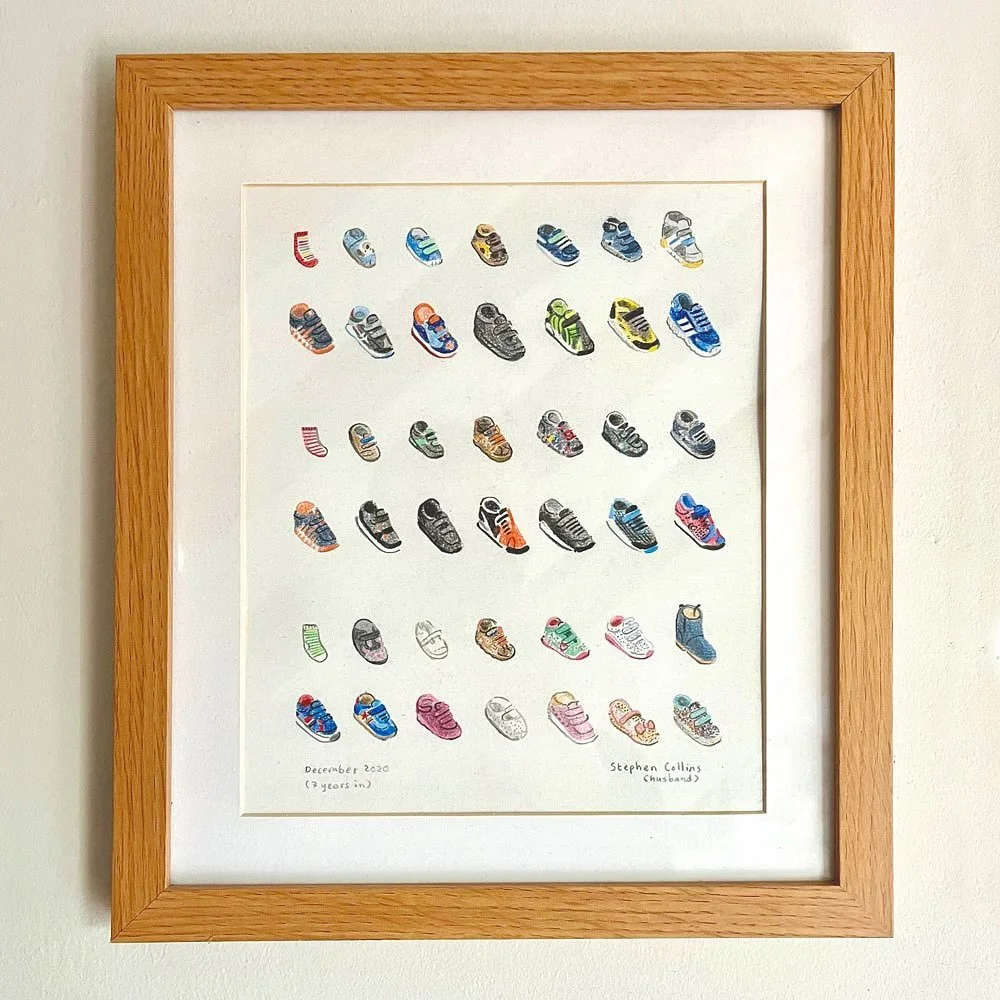
Thanks for taking your time today. In a way, this writing is a time capsule. Like Hansel and Gretel, I find myself leaving crumbs of my life behind for my future self (sometimes intentionally and sometimes not). Sketchbooks. Photos. Videos. Notes. Journal entries. The entire Email Refrigerator series is a digital time capsule of the last 7 years of my life.
I hope this made you think about your life in a new way. Always looking forward to hearing how.
Until next month, refridgeyalater.
Jake
Capsules
First Look at America's Time Capsule (America250.org)
International Time Capsule Society
That Feeling of Never Enough, Here's How to Handle It (Dan Harris)
Compromise of 1877 (Wikipedia)
Reconstruction Era (Wikipedia)
1987 Subway Trip to Coney Island
Developing 120 Year Old Photos
Alan Light's Photo Albums (Award Shows, Parades, and more from the 80s and 90s) (Flickr)
Well hello. Me again. From before. Hi.
If someone forwarded this Email Refrigerator to you and you'd like one every month, sign up here.
Read the last 87 issues here. My goal is 100 monthly emails in a row without advertising or monetizing.
If you want to keep these Email Refrigerators in the past, click here to unsubscribe. No hard feelings, really.
A few skills I cut from this month: time is the canvas, time as a thief, remembering what I did with my time before kids, farm time and fallow years
The Email Refrigerator is a monthly delivery of essays, poetry, imagery, and thoughts, written and curated by Jake Kahana. Why a refrigerator? Well, it's where we look for snacks, a little freshness, and where we hang the latest, greatest work. And besides, "newsletter" sounds like spam.